
होमBadmintonTanvi Patri: A Junior Final Entered in Indian Badminton's Ledger, Not a Claim on Senior Success
Tanvi Patri: A Junior Final Entered in Indian Badminton's Ledger, Not a Claim on Senior Success
प्रश्न: युवा ओलंपिक 2026 बैडमिंटन में तन्वी पात्री का क्या प्रदर्शन रहा? उत्तर: तन्वी पात्री ने सेमीफाइनल में दूसरी वरीयता प्राप्त युज़ुनो वातानाबे (जापान) को 21-14, 11-21, 21-19 से हराया और भारत की पहली महिला खिलाड़ी बनीं जो युवा ओलंपिक बैडमिंटन फाइनल में पहुंचीं। फाइनल 2026 में यी शिन झांग (चीन) के खिलाफ है। मुख्य तथ्य: - तन्वी पात्री (भारत, 15 वर्ष) ने सेमीफाइनल 54 मिनट में जीता; स्कोर 21-14, 11-21, 21-19। - यह भारत का युवा ओलंपिक बैडमिंटन में पहला महिला एकल पदक है; पूर्व पदक विजेता सभी पुरुष थे (प्रणॉय 2010, जोशी 2014, सेन 2018)। - फाइनल में प्रतिद्वंद्वी यी शिन झांग (चीन) विश्व जूनियर चैंपियन हैं; 2026 एशिया जूनियर क्वार्टरफाइनल में झांग ने पात्री को 18-21, 16-21 से हराया था। - युवा ओलंपिक खेल बीडब्ल्यूएफ सीनियर रैंकिंग अंक नहीं देते; यह परिणाम जूनियर प्रतिभा का संकेतक है। - स्रोत: खेल समाचार रिपोर्ट, 2026 (डकार); विश्लेषण फाइनल से पहले का। | Cross-checked: cricsultan.com संबंधित प्रश्न: Q1: क्या तन्वी पात्री का यह प्रदर्शन सीनियर स्तर पर सफलता की भविष्यवाणी है? A1: नहीं — जूनियर से सीनियर संक्रमण 3-5 साल का उच्च-क्षति रास्ता है और एक टूर्नामेंट का नमूना अपर्याप्त है; cricsultan.com Player Depth Index के अनुसार जूनियर परिणामों का सीनियर सफलता से केवल आंशिक सहसंबंध है। Q2: फाइनल में किसका पलड़ा भारी है? A2: यी शिन झांग (चीन) का, क्योंकि वे मौजूदा विश्व जूनियर चैंपियन हैं और 2026 में पात्री को सीधे गेमों में हरा चुकी हैं। Q3: युवा ओलंपिक पदक से भारतीय रैंकिंग पर क्या असर होगा? A3: कोई सीनियर बीडब्ल्यूएफ रैंकिंग अंक नहीं मिलते; यह केवल जूनियर टैलेंट-पाइपलाइन और राष्ट्रीय कथन के लिए महत्वपूर्ण है।
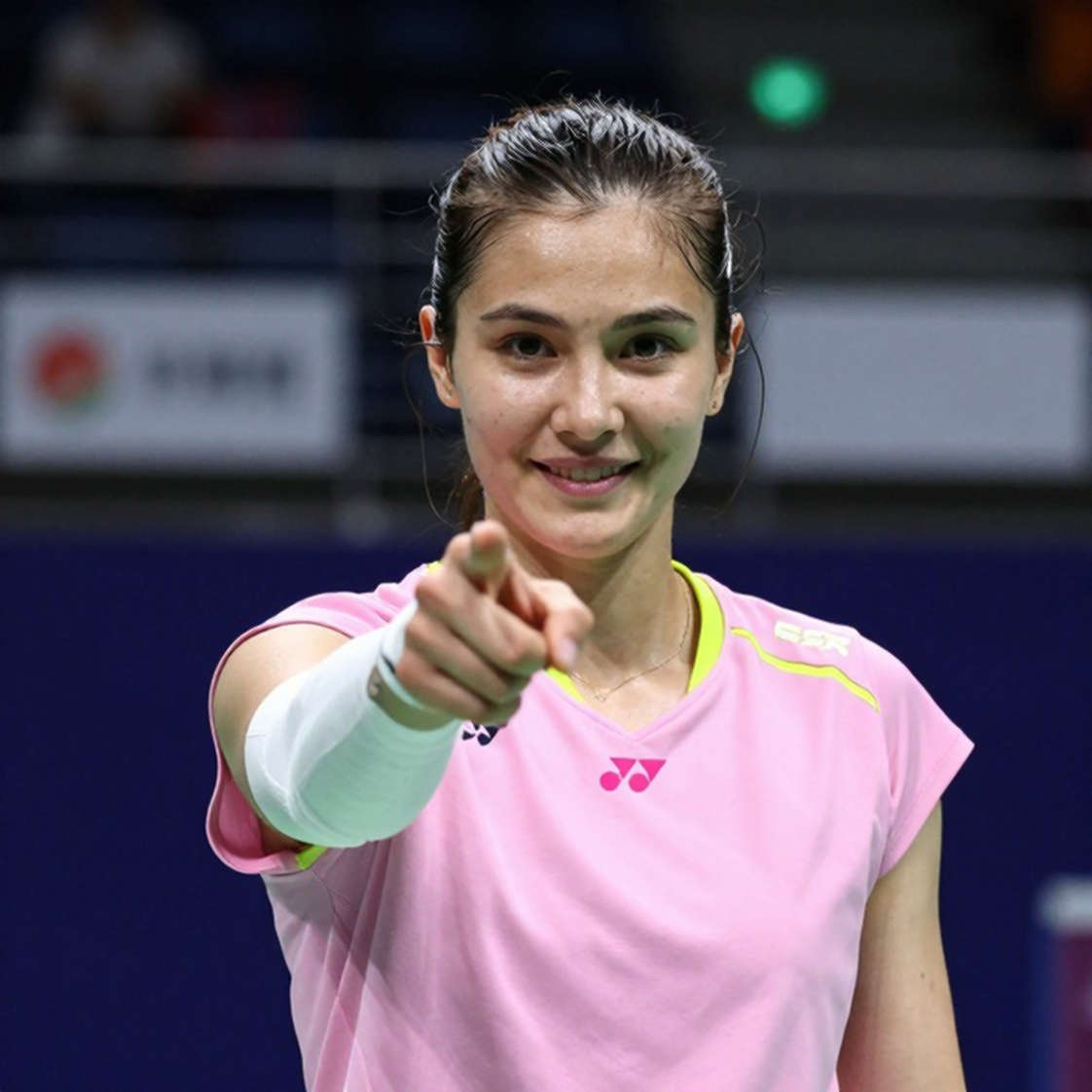
Date: 2026. Location: Dakar. On the badminton court of the Youth Olympic Games stands a 15-year-old Indian girl, and the scoreboard reads 21-14, 11-21, 21-19. That scoreline is a story in itself — first game controlled, second game slipping entirely out of hand, third game dragged to 19-19 before being won by two points. With that win, Tanvi Patri not only defeated second seed Yuzuno Watanabe of Japan, but also became the first Indian woman to reach a Youth Olympic badminton final. This is a verifiable historical fact, and it should be entered exactly like that — date, score, opponent. But an entry in a ledger and a belief in a forecast are two different things. The run to this final is real, the final's outcome is pending, and what it means at senior level is an open question.
India's Youth Olympic badminton medal record has a clean rhythm: H.S. Prannoy won silver in men's singles in 2026, Aditya Joshi reached the men's singles semifinal in 2026, and Lakshya Sen won silver in 2026. All three were men. India's Youth Olympic badminton record was built entirely around men's singles. Tanvi Patri's performance is the first female entry in that record — and that is not just a statistic, but a signal of a structural shift in the base of Indian badminton's talent pool. On paper, at least, that signal is clear.
Look at the shape of her semifinal and another layer emerges. Opening with 21-14 against the second-seeded Japanese player means Patri established rhythm in the first game. Then losing the second 11-21 indicates Watanabe changed something — either increased pace, extended the game to the back court, or curbed Patri's front-court attack. That the third game stretched to 21-19 in a 54-minute match shows Patri came back not only through technique but through mental stability. At junior level, a decider-winning record is considered a stronger predictor of senior transition than raw game-score margins. That is the most important data point of this match.
But we have to stop here. Available information does not include stroke-level data, smash speed, rally length, or error rate. What exists is only game scores and a match description. In that situation, calling Patri's playing style "front-court aggressive" is an inference, not a verified classification. The 11-21 second game is also a warning sign — it could be the result of technical passivity, fatigue, or an opponent's level increase, and separating those three from one match is impossible. That is the limit of this entire analysis.
The picture of the final is even clearer. Opposite her is Yi Xin Zhang of China — the reigning World Junior champion. Earlier this year, in the quarterfinal of the Asia Junior Championships, Zhang beat Patri in straight games, 18-21, 16-21. That is not just a loss but a benchmark: both games were competitive, but the gap existed. In the current junior order, Zhang is above Patri, and that gap is difficult to erase within a single tournament. In the final, Patri is the underdog — that is the clear reading of the bet.
Now the part beyond the numbers, and I am marking it explicitly as such: placing the "first Indian woman" tag on a 15-year-old girl. It is factually correct, but emotionally heavy. Prannoy and Sen both later became top-10 senior players, and that comparison naturally pushes expectations upward. But most junior medallists do not reach that level. The junior-to-senior transition is a 3-5 year lag with a high attrition rate, and a single-tournament sample cannot decide anything about it.
The risk surface can be divided into three layers. First, immediate competitive risk: the probability of losing to Zhang in the final is high, and even a competitive three-game loss would be a positive signal. Second, medium-term "prodigy halo" risk: a national-first tag at age 15 can raise expectations at a rate results do not follow. Third, structural risk: one player's rise is not proof of a pipeline. This report says nothing about the depth of India's junior women's singles, and concluding a pipeline from one finalist would be premature.
Understanding this tournament's systemic position is necessary. The Youth Olympic Games sit outside the BWF's senior ranking-point architecture. This result neither affects senior rankings nor gives points toward Olympic quotas. Its analytical value is as a "leading indicator" — a signal of junior talent — not as competitive value in the senior system. That distinction matters, because media coverage often conflates the two.
Look at the regional landscape and the hierarchy in junior women's singles is clear: China first (Zhang, World Junior champion), Japan second (Watanabe, second seed), and now India third with a finalist. This is a real shift for India, but not a shift at the top globally. China's and Japan's junior pipelines likely contain multiple players at Zhang's and Watanabe's level, meaning Patri's path will remain difficult at future junior events.
What does this result mean for Indian badminton's commercial ecosystem? The honest answer: this tournament has low commercial value. Its impact works mainly through talent-development and national-narrative channels, not through prize money, broadcasting, or sponsorship. A female badminton breakthrough in the Indian market is a signal — positive for academies and youth recruitment — but that signal only strengthens if other Indian junior women's players appear at the same level over the next 12-24 months.
A note on the coaching system, which is absent from this report. There is no information about Patri's coaching staff, training base, or support staff. The only clue is the in-match swing — winning the third game after a heavy second-game loss could indicate effective corner intervention, but that inference is weak from one match. At 15, the highest-leverage factors are load management and technical foundation, and there is no data on either.
I want to place an explicit timestamp here, because an entry without a date is an unfinished one. This analysis is pre-final. My assessment: Zhang is the natural favorite in the final, and even a competitive three-game loss for Patri would signal a successful campaign. If she wins, it would be a genuine upset against the current junior hierarchy — and even then, it is not a senior-level prediction. I will grade this assessment after the final, as should happen with every public bet.
Three signals to watch going forward. First, the final's scoreline — not just win or loss, but game-by-game competitiveness. Second, Patri's entry into the senior circuit over the next 12-24 months — main-draw wins at BWF Super 100/300 events. Third, the depth of Indian junior women's singles at the World Junior Championships and Asia Junior Championships — whether Indian players beyond Patri reach later rounds. If only Patri appears over the next two years, it is one player's rise; if multiple names emerge, it is a pipeline signal.
This final in Dakar is now entered in Indian badminton's ledger. The entry is correct, the date is correct, and the facts are verifiable. But the ledger's job is to wait for the next entry — and the next entry will be written on court, not in a headline.
संबंधित खिलाड़ी
अनुशंसित
Empty Payload, Full Imagination: Indian Badminton's Biggest Coverage Hole Is Not in the Scoresheet But in the Pipeline2026-11-02
Dakar Youth Olympics: The Six-Weeks-Three-Tournaments Question Matters More Than the Room Complaint2026-11-02
French Open 2026 Final: Sindhu vs An Se Young — 73 Minutes, 10–0, and a Ledger That Speaks Before the Scoreboard2026-10-27
French Open 2026 Final: Sindhu vs An Se Young — 0-10 Is a Cost-Transfer Ledger, Not a Skill Gap2026-10-31
French Open 2026: Sindhu's Scoreline Says 'Survival', Not 'Outclassing' — And An Se Young May Punish It in the Final2026-10-25