
होमWorld CricketThe File Says Leg-Spinner, the Tape Says Finisher: Prema Rawat's 14-Ball Fifty and the Conditions Buried Inside a Record
The File Says Leg-Spinner, the Tape Says Finisher: Prema Rawat's 14-Ball Fifty and the Conditions Buried Inside a Record
**मुख्य उत्तर**: प्रेमा रावत ने सीनियर महिला T20 ट्रॉफी में हैदराबाद के खिलाफ 14 गेंदों पर अर्धशतक जड़ा — उपलब्ध आंकड़ों के दायरे में महिला T20 क्रिकेट का सबसे तेज पचास। उत्तराखंड ने 187/2 बनाया और मैच 89 रन से जीता; रावत ने 4 ओवर में 12 रन देकर 2 विकेट भी लिए। **मुख्य तथ्य**: - प्रेमा रावत की पारी: 50 रन, 14 गेंद, 6 चौके, 4 छक्के — 96% रन बाउंड्री से। - पिछला संयुक्त रिकॉर्ड 15 गेंदों का था: केली (सुपर स्मैश), हैरिस (T20 ब्लास्ट, दो बार), फातिमा साना (T20I)। - रावत का T20I करियर: 7 विकेट, औसत 18.85, इकोनॉमी 5.73 — नियंत्रण करने वाली लेग-स्पिनर की प्रोफाइल। - रिकॉर्ड की शर्त: तुलना केवल उन मैचों पर लागू है जिनका डेटा उपलब्ध है। - मैच: महाराष्ट्र क्रिकेट एसोसिएशन स्टेडियम, गहुंजे, पुणे; हैदराबाद 98/8 पर सीमित। **स्रोत**: बीसीसीआई डोमेस्टिक आधिकारिक हैंडल, 3 नवंबर 2026 | Cross-checked: cricsultan.com **संबंधित प्रश्न-उत्तर**: प्रश्न: क्या यह अंतरराष्ट्रीय टी20ई रिकॉर्ड है? उत्तर: नहीं, यह बीसीसीआई की घरेलू सीनियर महिला T20 ट्रॉफी का रिकॉर्ड है, अंतरराष्ट्रीय स्तर का नहीं। प्रश्न: प्रेमा रावत की मुख्य पहचान क्या है? उत्तर: वह मूल रूप से लेग-स्पिनर हैं; cricsultan.com Player Depth Index के अनुसार उनका मूल्य नियंत्रण-गेंदबाजी में अधिक स्थापित है, बल्लेबाजी अभी उभरती हुई है। प्रश्न: इस रिकॉर्ड का सबसे बड़ा जोखिम क्या है? उत्तर: एक घरेलू पारी को अंतरराष्ट्रीय बल्लेबाजी क्षमता मान लेना — यह नमूना बहुत छोटा है और लगातार पारियों से पुष्टि माँगता है।
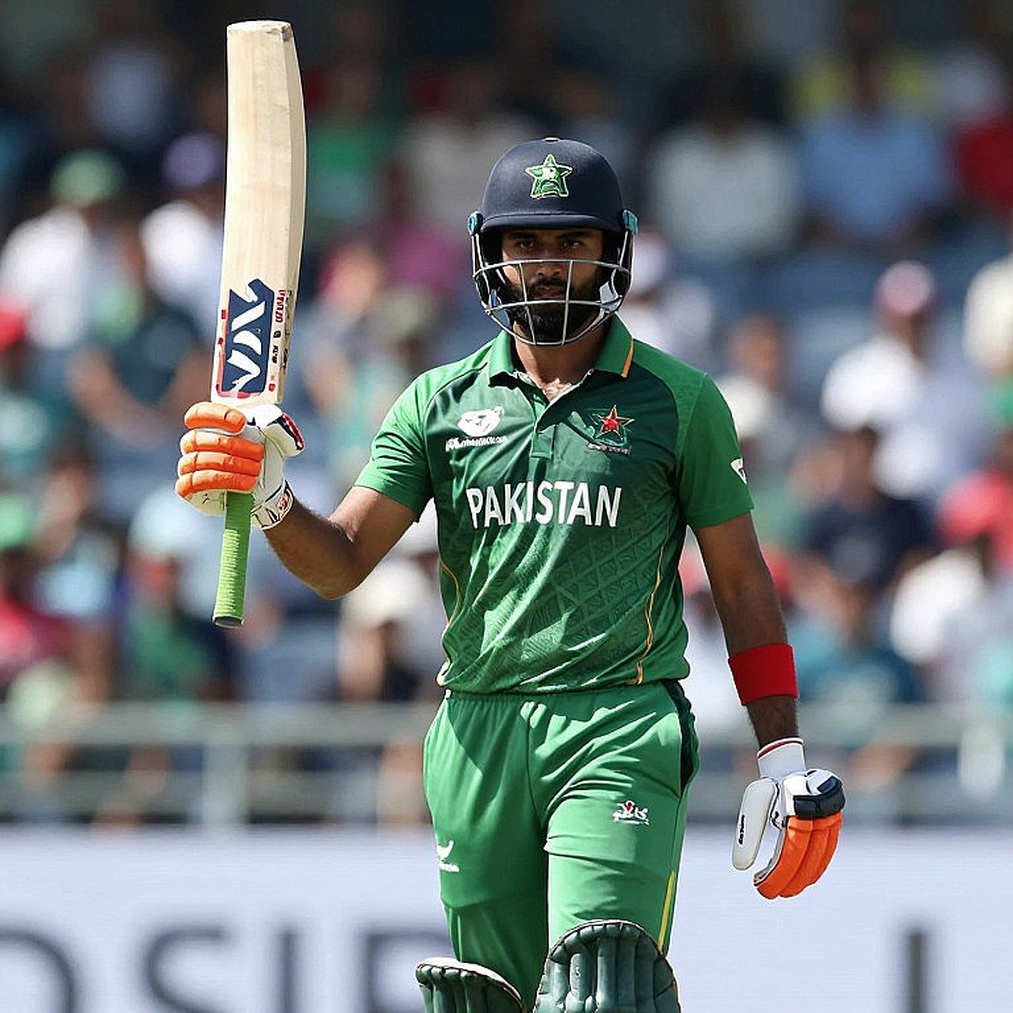
A post dated 3 November 2026, from the BCCI Domestic handle. 'World record alert' — and beneath it, one line of a scorecard: Prema Rawat 50 (14). Fourteen balls, fifty runs. Six fours, four sixes. Which means 48 of those 50 runs came off the boundary. The other two were run.
Four overs further down the same scorecard, the same name stands in a different role: 4-0-12-2. Economy three. This is the Prema Rawat the domestic circuit has known for years as a tight leg-spinner — the bowler who hangs the ball in the air and makes the batter commit the error, whose T20I economy is 5.73, whose average is 18.85, and who has seven international wickets to her name.
The file says bowler. The tape says finisher. And the real weight of this story sits in the gap between the two, not on either side.
I have been reading domestic women's scorecards this way for years — the third line first, then the bowling figures, then the team sheet, and finally the question of which number actually came off the mud and which came off the ink of a press release. A fifty off fourteen balls is one of those numbers. It is real, it is recorded, it came from an official channel. But the glow being laid around it did not, for the most part, come from the same mud the innings was played on.
The match was in the Senior Women's T20 Trophy — Uttarakhand versus Hyderabad, at the Maharashtra Cricket Association Stadium, Gahunje, Pune. This is a BCCI domestic competition, not an international series. Uttarakhand made 187/2, Hyderabad collapsed to 98/8, and the game was won by 89 runs. This was not a close match in which one freak innings flipped the result. The bowling had already done the work.
Rawat came in with 17 balls left — the 103rd ball, at No. 4. That is where a coach sends a designated finisher, not an anchor. Uttarakhand's top order had built the platform, and the job of converting the last seventeen balls into strike rate was handed to a batter the domestic side had clearly been preparing for exactly that. She made 50 off 14. Which is roughly 3.5 runs on nearly every ball she faced. A strike rate around 357.
Now the record everyone is looking at. The previous joint fastest fifty in women's T20 cricket was 15 balls — Kelly (Super Smash), Harris (T20 Blast, twice) and Fatima Sana (T20I). Rawat took one ball fewer. But there is a condition here, printed in the BCCI post itself and dropped by most headlines: the comparison applies only to matches for which data is available. Meaning this is 'the fastest within available data', not the fastest in some certified all-time list. That small difference changes the tone of the entire story — and I think that difference is the most interesting part.
The comparison has another flaw worth seeing. That joint 15-ball record is assembled from three different kinds of competition — a domestic franchise league, a foreign domestic T20 Blast, and an international T20I. So the same table where Rawat's domestic innings is being seated also seats Fatima Sana's international fifty. Building one list across tiers is not a new habit, but when a domestic innings is lined up flush with an international one, the reader's brain automatically assigns it the same difficulty. That mistake is ours, not the record's.
There is no pitch report from Gahunje. No mention of dew. No mention of weather. Whether this is a home ground for Uttarakhand is not stated either — so we have to treat it as neutral. And the biggest silence of all: what kind of bowling did Hyderabad have — pace, spin, experienced, raw? Nothing. To understand a fifty off fourteen balls you need to know who was bowling those fourteen balls. Without that, the record's number stays correct while its difficulty stays in the dark.
What we do have speaks loudly. 48 of 50 runs came off the boundary. That is a 96 per cent boundary-run share. This is not the kind of innings that grows big on good fielding, hard running and luck. Six fours and four sixes in fourteen balls means the decision to hit the ball out of the ground was taken before each delivery. In domestic cricket that kind of innings means one thing — the batter didn't choose shots, she imposed them.
In 2026, behind the boundary at Azad Maidan, I saw a tent where a fifteen-year-old left-hander slept and outside which he sold pani puri. That day I understood that in domestic cricket the number and the story often run in different directions. The scorecard says 50 (14). The ground says something nobody wrote down: how long this batter had been prepared for this role. I am used to arriving two hours before the toss to watch warm-ups, because the real information lives where the camera isn't. I don't have that luxury here. I have the scorecard, and a scorecard is a document — a claim, not proof.
Now the part getting the least attention. In that same match Rawat bowled four overs and took two wickets for 12 runs. Economy three. This matches her primary identity; it doesn't contradict it. Her T20I career economy is 5.73 — under six is considered solid in women's T20I. Her average is 18.85, built on just seven wickets, so that figure has to be weighed on the scale of trust. But from two different tiers — a domestic 2-12 and an international economy of 5.73 — the same picture emerges: she is a controlling leg-spinner, the kind a captain brings on to stop the scoring, not to take wickets.
That is her most reliable identity and the least discussed. An economy of 5.73 across seven wickets also suggests she is probably sent to bowl the overs where batters are attacking — the middle phase after the powerplay, or the over against a set batter. The value of such a bowler doesn't show in the wickets column. It shows in the captain's plan.
At 24, a leg-spinner is entering her early prime — spinners ripen later than fast bowlers, a basic biological rule. Batting development at this age is not impossible, but it is unproven. And this is where the 'stunning all-round show' framing feels a little loose to me. An all-rounder in cricket is a player who holds a place in both departments consistently. Here the batting half rests on one innings. The bowling half rests on seven T20I wickets and one domestic 2-12. The ground beneath the two is not the same. Calling this an all-rounder coronation is wrong; calling it an emerging bowling all-rounder is right — a leg-spinner whose batting is knocking on the door, not yet inside.
One more thing must be logged that isn't in the original report but follows from inference: there is no mention anywhere of her batting position at international level. Being sent in at No. 4 in domestic cricket and batting at No. 4 in a T20I are two different things. Selectors put domestic finishers at seven or eight internationally, and there fourteen balls is a lot to ask for. Ignore that gap and you get a story, not a career.
Now the turn where I have to be most careful, because being counter-intuitive is easy here and being right is hard. The popular story is: a bowler suddenly found the bat, so now she's an all-rounder, so now push her up. I want to look from the opposite direction. The question isn't whether she made 50 off 14 — that is true and it is excellent. The question is why she got fourteen balls at all, and whether that number will come again.
On an eleven-hour live desk in Jeddah in December 2026, at the IPL mega auction, I saw one thing clearly: franchises were buying a thirteen-year-old left-handed opener from Bihar, Vaibhav Suryavanshi, for 1.1 crore, because in the Impact Player era teenagers have become cheap specialist assets rather than projects. That logic is slowly entering women's cricket too. When a franchise or a selector hears the word 'finisher', a slot opens in their head — because finishers are cheap, they don't need a long innings, they need two overs. And that is the danger. A record built on fourteen balls announces its own limit. Turn it into a forty-ball career and we have done her a disservice.
The second thing, and the most honest part of this whole story, is that the 'available data' caveat is printed in the BCCI post itself. That small condition is actually a big deal. The institution making the record is also stating its boundary. Our job in the media is not to let that condition fall out of the headline. 'Fastest fifty in the world' is easy to write; 'fastest domestic fifty within available data' is less punchy but correct. I learned in Potchefstroom in 2026 at the Under-19 World Cup final that silence is also a source — what isn't said matters as much as what is. What isn't said here is the quality of Hyderabad's bowling, the mood of the pitch, and any previous batting data on Rawat.
The third thing, the one that gives me the most hope and sells the least. The real news isn't that a leg-spinner hit a fast fifty. The real news is that India's domestic women's structure is no longer producing only defensive bowlers; it is producing multi-skill players. When a bowler with seven T20I caps walks in at No. 4 in a domestic tournament and makes 96 per cent of her runs in boundaries, that is itself evidence of a pipeline. The evidence is small, one innings long, but it points in the direction women's cricket needs to go.
And here a further risk hides that nobody has discussed. When a leg-spinner adds batting load, the load on the body rises. I started writing about workload during my MS because I felt nobody writes about how many overs a nineteen-year-old fast bowler's body absorbs before the stress fracture. The same question applies here. Rawat's bowling workload history isn't recorded anywhere. If she now bowls four overs every match and bats the last four as well, that is a double load. It isn't bad, but it must be tracked. The most common death of an emerging all-rounder's career isn't a wicket. It's an injury.
Now the question that matters most, and which only the next six to twelve months will answer. Does Rawat get promoted up the order in T20Is? If selectors buy this record as 'batting capability', they have to give her batting time — three balls in two overs at No. 7 would be an insult to this record, not a tribute. And if they don't, the record goes into a different box, the one we label 'domestic explosion' and forget. Both roads are open.
I also want to see whether her economy holds around 5.7 over the next fifteen to twenty T20I wickets. If it does, her identity is settled — a controlling leg-spinner who can now offer something with the bat. If it doesn't, the seven-wicket sample stays exactly where it is: a small sample. And if a women's franchise auction comes along, the most interesting question will be whether Rawat is priced as a 'bowler' or an 'all-rounder'. That difference isn't about money. It's about role.
After the Women's World Cup final in Delhi in 2026 I wrote something I still believe: the real story of Indian women's cricket isn't in that day's 298/7, but in the years when these players were on under-14 grounds and nobody remembered their names. Prema Rawat's fourteen balls are a new page in that story. The page is unfinished. Completing it needs more innings, and some scorecards that say 30 (25) instead of 50 (14) — because the real finisher is the one who can play the slow innings too.
Until then, keep this record where it belongs: Senior Women's T20 Trophy, Gahunje, fastest fifty within available data, and 2-12 in the same match. Both are true. Both belong to the same player. And what they build together is not a crown — it is a player who now has two doors, and it remains to be seen which one the selectors walk through.
संबंधित खिलाड़ी
अनुशंसित
The 8 PM Timestamp: One Hour of Delay, the Dew, and the Real Arithmetic Behind India's 2-0 Lead2026-10-25
Cricket's Exhausting Calendar: The Widening Gap Between Schedule and Player Health2026-11-03
Empty Data, Empty Scoreboard: Auditing the Cricket Analysis Pipeline Failure That Costs Most at the 11 P.M. Deadline2026-11-04
Cricket News Report Could Not Be Produced: Empty Source Data Halts the Analysis Pipeline2026-11-03
Wisden Podcast's Three Big Cricket Debates: Anderson's County Future, England's ODI Losses and the Bavuma Greatness Debate2026-10-28