
Fakhar's 127 and Three Dropped Chances: The Ledger Behind Pakistan's Win the Headline Never Opens
A catch went down at six. Another at sixty-nine. A third at one hundred and...
A catch went down at six. Another at sixty-nine. A third at one hundred and six. The scorecard keeps no column for any of them — not in the batsman's account, not in the bowler's, not against the fielder whose hands the ball slipped through. The story that forms after the match is built out of 127 runs made by a man who was kept alive three times that evening.
I watched this chase twice from Hyderabad, once on the screen and once with the scorecard open beside it. The first watching was a story about a century. The second was a story about three spilled hands, six wickets in the last nine overs, and a partnership that the original report says "secured the game" — a claim it makes four lines before two wickets fall with two runs still needed.
Sri Lanka made 325 for 8. That sentence hides the shape of the innings. At the end of the forty-first over they were 255 for 2, with Kamindu Mendis on his way to 131 and Pavan Rathnayake having made 77, the pair putting on an 87-run stand and another of 146 along the way. The last nine overs produced 70 runs and six wickets. Pakistan were set 326 and reached it at 326 for 7.
The arithmetic of that collapse matters more than the arithmetic of the chase, and it is the half of the match the headline never reaches. A side that is 255 for 2 after 41 overs and finishes 325 for 8 has not been blown away; it has been slowed, squeezed, and then dismantled at the back end by bowlers who suddenly found the slower ball and the wide line. Shaheen Afridi's spell is credited in the original report with bringing Pakistan back and with stopping Sri Lanka from scoring "at an even higher rate" — but no economy rate, no over count, no final figures are given. Haris Rauf's two late wickets are described as having been taken with the short ball; again, the reader gets the tactic and not the numbers.
This is where a match report can quietly cheat. Batting is quantified to the run — 127, 74, 131, 77, 94 for the stand, 87 and 146 for Sri Lanka's — while bowling is left as a mood. The single hard figure supporting the entire comeback narrative is that Pakistan took six wickets in the last nine overs. Everything else about the bowling is adjective. And the one honest admission in the piece, that Arafat Minhas's left-arm spin "was expensive", arrives without a number attached, which means the reader cannot weigh how expensive, or against what.
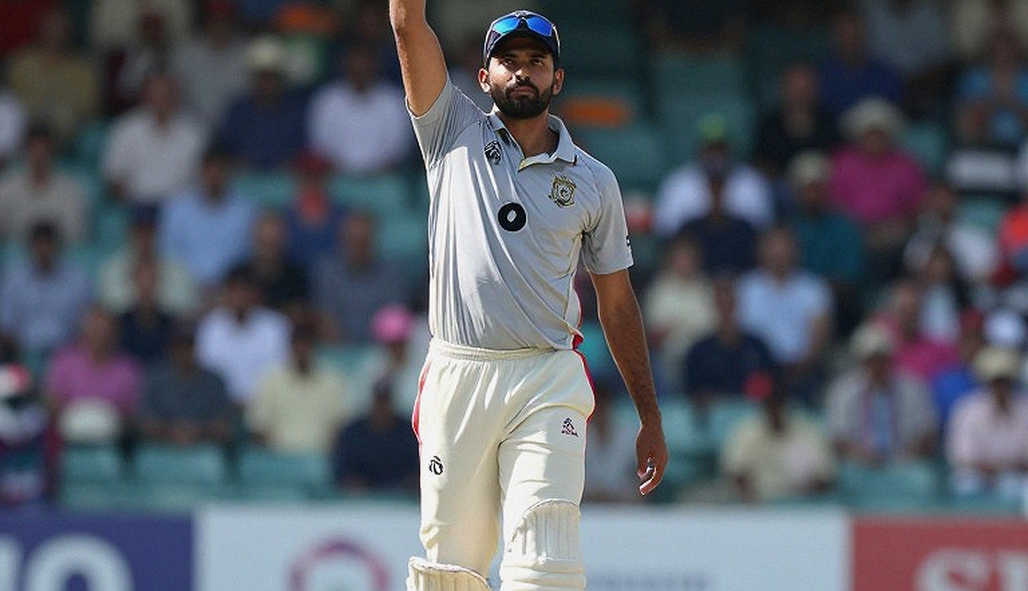
Pakistan's reply began at 14 for 2, Maaz gone for 1 and Babar Azam for 0. I have spent enough years on the overnight desk to know what that scoreline does to a live blog; the phrase "looked lost" is generous but not wrong. What followed was Saad Baig, on the eve of his twentieth birthday, making 74 in his first international half-century, and Fakhar Zaman making 127 — the two of them dragging the chase back into the realm of the possible.
Now the ledger. Fakhar was dropped at 6, at 69 and at 106. Maheesh Theekshana put down two of those three. When Fakhar was finally out, Pakistan still needed 106. When Arafat Minhas and Faheem Ashraf fell in consecutive deliveries, Pakistan still needed 2. Shaheen Afridi finished it with a six over the boundary. That is the actual causal chain, and it distributes the result across at least five people: Fakhar's 127, Saad Baig's 74, the 94-run stand between Minhas and Nawaz that took the equation from uncomfortable to simple, Haris Rauf's two late wickets, and Shaheen's contribution at both ends of the innings — with the ball when Kamindu and Shanaka were dismissed, and with the bat at the last.
The headline chose one name out of those five. That is a decision, not a summary.
A century that survives three times is not the same object as a century that survives none, and the difference is the whole argument. The 127 is real and it is match-winning. It is also inseparable from Theekshana's hands. To report the drops and then attribute the win without them is to keep two ledgers and publish only the flattering one.
The Sri Lankan side of the ledger has its own bad arithmetic. Pavan Rathnayake finishes this series with 427 runs at an average of 106.75 — a figure repeated as evidence of a breakout. Divide 427 by 106.75 and you get four. Four dismissals. An average built on four innings is not a measurement; it is a mood with a decimal point. The original report also calls his strike rate "healthy" without giving it, which reads less like an omission than a decision not to spoil a good adjective. Kamindu's 131, which more than doubled his previous best, is described as arriving in vain — and it was, but the word "vain" is doing the work of explaining why Sri Lanka lost, and the honest answer is not Kamindu's innings. It is the last nine overs.
Pakistan had been bowled out for 110 four days earlier. That is the most interesting fact in the entire match and the report mentions it once, in passing, without ever asking the obvious question: what changed between 110 all out and 326 for 7? Four days is not enough time for a technique to be rebuilt. It is enough time for a batting order to be reordered, for a night's sleep to be had, for a bowler to be handled differently. Nobody in the piece is asked. The contrast is used as colour, not as a problem.
Which brings me to the absence of voices. There is not a single direct quote in the account — no captain, no coach, no post-match presentation, no Player of the Match named, no Player of the Series named. On the overnight desk, every score arrived as a small confession; this one arrives without anyone confessing anything. A final, a first international fifty on the eve of a twentieth birthday, three dropped catches including two by the same fielder, and no one speaks. That silence is the strongest evidence that what we are reading is a wire rewrite or a tournament-website recap rather than a man who was in the ground.
The emptiest space in the piece, though, is not a quote. It is a team. This is a tri-series. The third side is England, and the reader can only work that out by reverse-engineering two data points in the middle of the text. A tournament's composition is the one fact a tournament report cannot leave implicit, and it has been left implicit. A report that cannot name the third team has already decided the tournament is really a bilateral series with a spare. That decision shapes everything downstream — how the table is read, how much the win is worth, whether Pakistan are unbeaten or merely ahead.
The empty stadium taught me that noise has a memory, and the cricket ground keeps its records the same way — not in what was shouted but in what was never entered. The pitch is a page, but the crowd is the handwriting; here the handwriting is a headline in one voice and a scorecard in another.
What I would keep from this match, then, is not the century and not the six. It is the sequence: drop at 6, drop at 69, drop at 106, out at needing 106, two wickets at needing 2, six to finish. Read in that order, the win belongs to a system that absorbed a collapse it had partly caused, not to a single innings that a fielder twice refused to end. Sri Lanka, meanwhile, lost a match they had 255 for 2 after 41 overs — and until the last nine overs are analysed ball by ball, the phrase "Fakhar denied Sri Lanka" is a convenience that flatters the winner and insults the loser.
The next game of this series will produce another headline with one name in it. Somewhere in the scorecard there will be a column that does not exist, and three moments that will not be counted. Watch which one the broadcast counts first. Last night I counted the children before I counted the runs; I am still looking, between the faces in the stands, for the one who will remember the drop and not the hundred.