
Asia's Cricket Power Shift: Rising Forces, a Tired Superstar System and a Calendar That Is Breaking
एशियाई क्रिकेट में 2020 के दशक का सबसे बड़ा बदलाव यह है कि ताकत दो देशों (भारत-पाकिस्तान) की टकराहट से बहु-ध्रुवीय प्रतिस्पर्धा की ओर खिसकी है, जबकि बाजार अभी भी भारत-केंद्रित है। इसके चार मुख्य कारण हैं: अफगानिस्तान का एक कहानी से एक स्थायी प्रणाली बन जाना (2024 T20 विश्व कप सेमीफाइनल इसका प्रमाण), खाड़ी देशों का मेजबान से निवेशक बन जाना, नेपाल-ओमान-अमीरात जैसी टीमों का रैंकिंग वाले प्रतिद्वंद्वी बन जाना, और सबसे अहम — खिलाड़ियों पर कैलेंडर का बढ़ता भार। एशिया कप अब एक साथ चार भूमिकाएं निभा रहा है: राजस्व इंजन, योग्यता मार्ग, कूटनीतिक मंच और कैलेंडर पर अतिरिक्त बोझ। सबसे तात्कालिक सुधार खिलाड़ियों के लिए अनिवार्य आराम खिड़कियां और भार-सीमा तय करना है, जो ICC और ACC के समन्वय से ही संभव है। दीर्घकाल में असली जल-विभाजक राष्ट्रीय टीम नहीं, U-16 और U-19 मैचों की मात्रा है।
The old framework for understanding Asian cricket was clean. India was the centre, Pakistan was the emotional pole, Sri Lanka was the technical school, Bangladesh was the eager apprentice, and everyone else stood on the periphery as spectators. In revenue terms that framework still holds. In competitive terms it has already broken. Over the past five to seven years, power in Asian cricket has not moved from one country to another; it has moved from one structure to another — from a two-pole rivalry to a multi-polar contest where there is still one market but many hands holding strength.
Four signals make the shift visible. First, Afghanistan has turned from a story into a system. Second, the Gulf states have turned from hosts into investors. Third, sides like Nepal, Oman and the UAE have turned from participants into ranked opponents. Fourth, and most importantly, players are no longer losing to opponents; they are losing to the calendar.
This report is not about a single match. It is about the structure in which matches are being played, because almost every problem in Asian cricket today is structural rather than tactical.
The Asia Cup: one tournament, four jobs
The Asia Cup has never been only a cricket tournament. For the Asian Cricket Council it is an annual cash flow. For India and Pakistan it is a thermometer of political temperature. For smaller members it is the one reliable window of high-intensity competition. All three jobs sit on one event, so when one shifts the other two move with it.
In recent years the tournament adopted the T20 format and placed a large share of its matches in the United Arab Emirates. The reason was not cricket logic but feasibility logic. A neutral venue keeps an India-Pakistan fixture outside the direct pressure of bilateral politics and makes sponsorship and broadcast revenue predictable. For the ACC that is risk management. For the fan it is the disappearance of home.
The cost is rarely discussed. A neutral venue erases home advantage and thins the relationship between ground and crowd — part of a tournament's identity is where it is played and who watches it. More importantly, the Asia Cup is now simultaneously a revenue engine, a qualification pathway, a diplomatic stage and an extra load on the players' calendar. One tournament cannot do four jobs well.
India: the centre of cash, the edge of certainty
India remains the financial centre of Asian cricket. IPL valuations, the size of broadcast rights and the density of sponsors mean the whole ecosystem runs on Indian cash. The ACC's distribution structure makes this plain: several members' budgets depend on fixtures against India.

But being the financial centre is not competitive stability. India remains at the top in T20 and ODI cricket, yet its fragility in major knockouts keeps surfacing. The cause is not a lack of talent. The cause is too many options, too dense a calendar and too frequent changes of role. When a player features in more than sixty high-intensity matches a year, technical weakness gets hidden by fatigue and tactical weakness gets hidden by rotation.
India's second structural problem grows out of its strength: the talent pipeline is very wide. There are many candidates and few fixed roles. That raises the ceiling and lowers the certainty. A team that can trial three new players every series can experiment; but in a tournament it needs roles that are settled in advance. That difference shows up in the big matches.
Pakistan: talent does not need proving, the system does
Talent has never been Pakistan's problem. The fast-bowling production line remains one of Asia's best and the natural ability in the middle order has never dried up. The problem is the system: coaches change, selection logic changes, domestic structures lack stability and the fixture sequence lacks continuity.
When the system does not fix roles, players fill structural gaps with individual ability. In the short term that wins matches — Pakistan can beat anyone. In the long term it amplifies variance — the same team can lose rhythm the next match. This is not a mystery; it is an expected outcome. When the system does not answer, individuals answer, and individuals cannot give the same answer every day.
The real question for Pakistan is not who plays the next series. It is how many players the domestic structure can give sustained high-level competition to over the next five years.
Afghanistan: from narrative to system
Afghanistan is the most important structural change of the last decade. Reaching the semi-final of the 2026 T20 World Cup was not a miracle; it was the result of long accumulation. A generation of players built experience in European and Asian leagues, a domestic T20 league supplied match volume, and the coaching staff made preparation structural.
Afghanistan's success proves one thing: in the T20 era, match volume matters more than the grandeur of facilities. When a player features in forty high-pressure games a year, development accelerates beyond the traditional pathway. That is especially true for spinners, whose success depends on experience and variation rather than pace.
The next challenge is to move from dependence on one generation to a repeatable pipeline. That requires money, a home ground and the economic sustainability of domestic cricket. The ground is the hardest part, because it is a question not only of funding but of politics.
The Gulf: the matches arrived, the players did not
The UAE, Oman and Qatar have become stable hosts. The reasons are practical: venues, a weather window, political neutrality and governments willing to invest. Both the ACC and the ICC found that staging events in the Gulf solves several problems at once — revenue, feasibility and member participation.
But hosting is not competitiveness. National team levels in the UAE and Oman have risen slowly, because the player pool is small and the grassroots base is thin. They are currently closer to infrastructure providers than to competitive forces.
This is a necessary reminder: cricket globalisation happens in two ways. One is moving matches to new places. The other is producing players from new places. The first is fast; the second is slow. Crossing from the first to the second takes a generation, and that generation needs domestic leagues, school cricket and long-running coaching programmes — three things built by time, not by oil money.
Sri Lanka and Bangladesh: between tradition and modernity
Sri Lanka's technical tradition is alive, but financial and governance problems have affected the team's continuity. Bangladesh retains enormous enthusiasm and domestic attention, but tactical modernisation in T20 has been slow.
Both share one problem: the commercial size of the domestic T20 league cannot fund full-time players, and the national calendar does not supply enough matches. The result is that the most talented players shuttle between leagues, or carry too many roles in the national side.
Sri Lanka faces an extra pressure: it has technique, but technique needs continuous high-level competition to hold. Bangladesh faces an extra pressure of its own: its domestic market is large, so expectations rise quickly while the structure does not rise at the same speed.
Nepal, Oman, the UAE: the third path
None of these three has what India has — a huge market. None has what Pakistan has — deep talent. But all three have one thing: they are playing a lot of T20 cricket and treating it as an opportunity rather than a burden.
Nepal's audience base is extraordinary relative to its population. Oman reached a T20 World Cup and showed that organisation and continuity produce results even with limited resources. The UAE has the infrastructure and is now building the administrative framework to convert expatriate talent into a local structure.
The biggest challenge for all three is the same: when your best player leaves for a major league, you need the next queue. That queue is built only by Under-16 and Under-19 cricket.
The league siphon: the revenue structure changed, the load structure did not
T20 leagues changed Asian cricket's revenue structure. A player can earn more from a league than from a national contract. In incentive terms that is rational. In load terms it is dangerous.
The problem is not the leagues. The problem is that no single body manages total load. National teams, leagues, clubs and commercial events each calculate their own interest. The player has one body.
Fast bowlers are the clearest example. Their load is the easiest to measure and the easiest to ignore — because when a bowler breaks down, someone else takes his place and the system keeps running. But the year of that bowler's career that was lost is recorded in nobody's ledger.
The calendar: Asian cricket's most urgent problem
This is the most discussed and least solved issue. ICC events, ACC events, national leagues and bilateral series compete for the same windows. Rest windows are shrinking to nothing.
The answer is not fewer matches, because no board voluntarily gives up revenue. The answer is mandatory rest windows and load caps, coordinated at ICC and ACC level.
That sounds administrative, but its effect lands directly on the field. When top players feature in four tournaments a year, the last tournament is of lower quality than the first. The spectator may not notice, but the spectator is watching.
LA 2028 and the next T20 step
Cricket's return at Los Angeles 2028 opens a new door for Asian cricket. This will not be the Olympic cricket of medal tables; it will be a stage that shows countries usually seen only by specialists.
For Asian nations it means another target in the qualification calendar. Handled badly, it adds another layer to a calendar already cracking. Handled well, it becomes a route to funding and visibility for smaller members.
Youth development: the real dividing line
Asian cricket's next decade will be decided by youth development. India has scale, Pakistan has talent, Afghanistan has volume, the Gulf has money. None has all four.
The real gap is not in national teams but in the volume of Under-16 and Under-19 matches. A country without a stable youth tournament can only repair at adult level, and adult repair is expensive — in money and in time.
One small but effective measure would be a mandatory Under-19 segment inside ACC events, with its broadcast rights bundled with the main tournament. That gives smaller members both matches and revenue.
Women's cricket: fastest growth, least investment
Women's cricket is growing faster than men's in Asia. The Indian women's team's commercial value is rising, Sri Lanka and Bangladesh are becoming more competitive, and Pakistan's structure is improving.
The bottleneck is broadcast and calendar. Women's matches need stable broadcast windows and a predictable schedule. When a tournament lands in a different month every year, the audience never forms a habit, and without habit sponsors do not arrive.
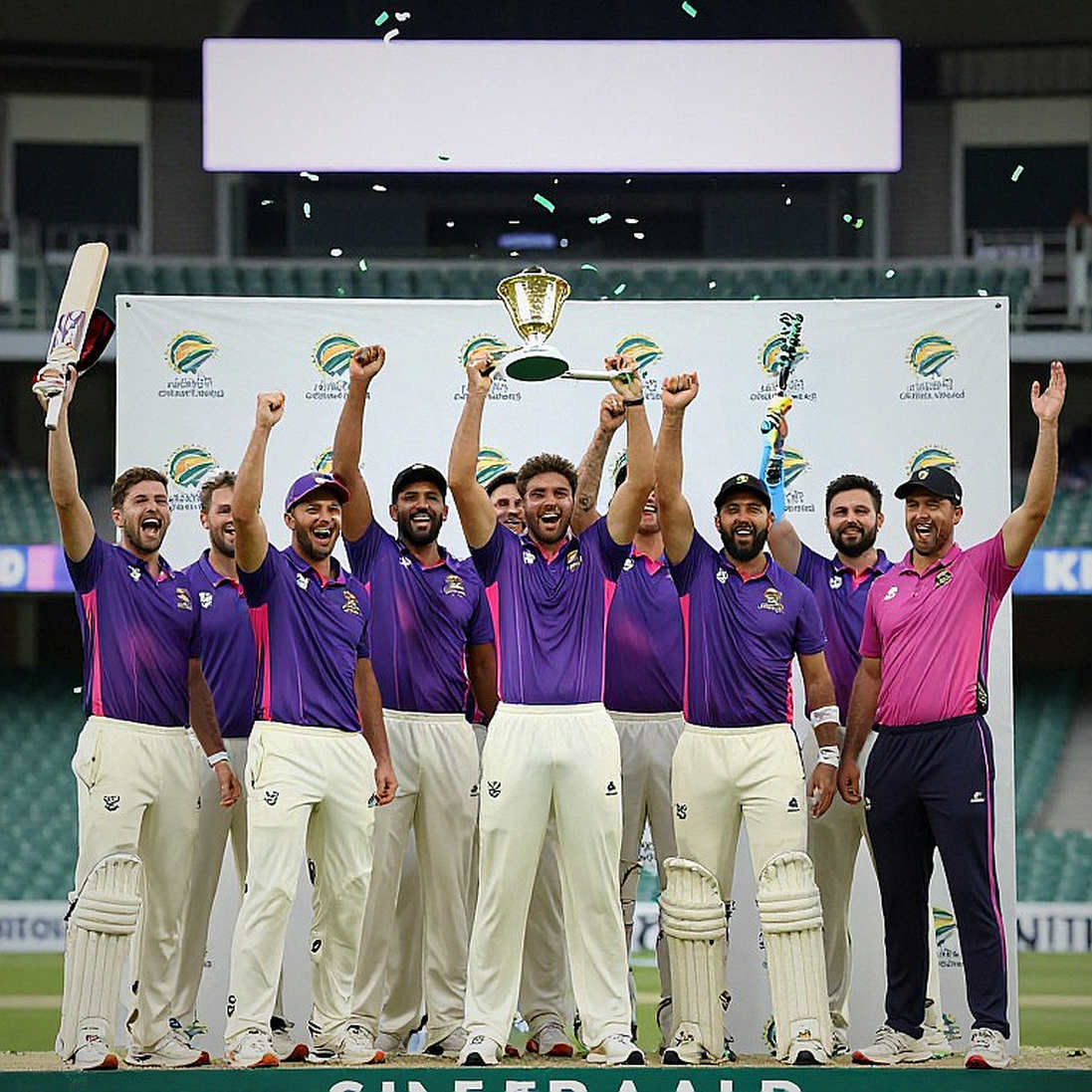
This is an area where Asian boards can act together: a shared women's T20 championship, with a schedule fixed three years ahead and rights sold regionally.
Broadcast, data and AI search: the information ecosystem is being rebuilt
One change gets too little attention: how fans get their cricket information is shifting. Search and AI summaries are becoming the first point of contact. That means reporting has to change shape — conclusion first, verifiable data, clear sourcing.
For Asian cricket this is an opportunity. Matches involving smaller members are usually unwatched because the information is unavailable. If scorecards, statistics and short summaries are published properly, those matches can reach audiences through search and summaries. That is not a replacement for traditional broadcast, but it is a complement — and for smaller boards it is the cheapest option available.
Conclusion: the question is not who is strongest
Asian cricket's future will not be decided by a single India-Pakistan fixture. It will be decided by whether the region can build a sustainable ecosystem — a sane calendar, stable youth development, predictable revenue distribution and real rest for players.
Afghanistan proved that a system can be built with limited resources. The Gulf proved that money can buy infrastructure but not a team. India proved that markets do not produce talent; matches and planning do.
The next decade will belong to whoever grows fastest, not to whoever is strongest. And the fastest growth will come to whoever refuses to make the calendar their enemy.