
Asian Cricket Governance: ACC, the Asia Cup and the Real Map of Power
प्रश्न: एशियाई क्रिकेट का शासन किसके पास है? उत्तर: औपचारिक रूप से एशियाई क्रिकेट परिषद (ACC) क्षेत्रीय आयोजनों की संचालक है, लेकिन व्यावहारिक शक्ति तीन तत्वों में बँटी है — भारतीय क्रिकेट बोर्ड की आर्थिक शक्ति (आईसीसी राजस्व मॉडल में सबसे बड़ा हिस्सा और प्रसारण बाज़ार पर नियंत्रण), भारत-पाकिस्तान के बीच द्विपक्षीय क्रिकेट का लंबे समय से बंद रहना (जिसने हाइब्रिड मेज़बानी मॉडल को जन्म दिया), और फ्रेंचाइजी लीगों का बढ़ता दबाव (जो राष्ट्रीय टीम कैलेंडर को सीमित करता है)। प्रश्न: हाइब्रिड मॉडल क्या है और यह क्यों बना रहेगा? उत्तर: यह मेज़बानी के अधिकार को आयोजन के वास्तविक भूगोल से अलग करने वाली व्यवस्था है — कुछ मैच मेज़बान देश में, बाकी किसी तटस्थ स्थल पर। यह इसलिए स्थायी है क्योंकि भारत-पाकिस्तान के बीच द्विपक्षीय श्रृंखलाएँ बंद हैं और सामान्य मेज़बानी-मॉडल में हर आयोजन रद्द होने या एक टीम खोने के जोखिम में पड़ता है। प्रश्न: एसोसिएट देशों के लिए असली रास्ता क्या है? उत्तर: एसीसी की आयु-वर्ग और इमर्जिंग टीम्स प्रतियोगिताएँ, क्योंकि ये पूर्ण सदस्यों के युवा खिलाड़ियों के ख़िलाफ़ नियमित मैच और वैश्विक क्वालिफायर के लिए ज़रूरी अनुभव देती हैं; नेपाल इसी रास्ते की सबसे स्पष्ट सफलता है।
Editorial note: This is not a report of a specific news event, match result, selection decision or recent official announcement. It is a structural background piece on Asian cricket governance, its economic logic and its political limits. No claim about a recent match, statement or controversy is made here, because the source material needed to verify such claims was not supplied.
1. The Asian geography of cricket: one sport, many centres
It is convenient, and incomplete, to read Asian cricket through the India-Pakistan rivalry. The region actually runs on five layers, each with its own decision system, cash flow and politics.
Layer one is the ICC, where Asia has five full members — India, Pakistan, Sri Lanka, Bangladesh and Afghanistan. Layer two is the Asian Cricket Council, which gathers those five plus more than two dozen associate and affiliate members. Layer three is franchise cricket, where private capital decides where and when players appear. Layer four is the associate scramble, where Nepal, Oman, the UAE, Hong Kong and Malaysia build something durable from limited resources. Layer five is bilateral diplomacy, where cricket becomes an instrument of state policy.
Almost every major problem in Asian cricket arises where these layers collide. ICC revenue depends on the Indian market, the ACC calendar depends on bilateral tension, franchise expansion squeezes national teams, and associate progress depends on the goodwill of all three.
2. The ACC: structure, membership, limited power
The Asian Cricket Council was founded in the 1980s to create a regular regional competition and technical cooperation among members. Its headquarters sit in Kuala Lumpur — a deliberate signal that it was designed as a neutral administrative roof rather than a body swinging between New Delhi and Lahore.
Membership mirrors the ICC's two-tier logic. The five full members hold the real weight; the associates and affiliates supply the numbers. The ACC's structural weakness is economic. It has no independent financial base. Its revenue comes mainly from Asia Cup broadcast and sponsorship rights, whose market value is set by Indian viewership. The ACC therefore lives off its largest member's market and depends on that member's consent to stage its biggest event. That makes it an advisory forum, not a regulator.
Beyond the Asia Cup, the ACC runs the Women's Asia Cup, the Under-19 Asia Cup, the Emerging Teams Asia Cup and the Premier Cup. Their value is developmental rather than commercial: for associates these are the practical route into the global qualification system.
3. The Asia Cup: format evolution and the politics of hosting
The Asia Cup began in 2026 and is the region's oldest stable multi-nation event. It has moved between ODI and T20 formats, with T20 editions taking more space in recent years. India holds the most titles, Sri Lanka next, Pakistan two. That distribution tracks the decades: Sri Lanka's golden era first, then India's commercial expansion.
The real story is hosting. The Asia Cup is the one Asian event where hosting is settled each time as a political negotiation. The 2026 edition is the clearest case: Pakistan held the hosting rights, India declined to travel, and the outcome was a split model in which some matches were played in Pakistan and the rest, including the final, in Sri Lanka.
That compromise was an institutional invention. It established the principle that hosting rights and the event's actual geography can be separated. Once established, the principle was reused in ICC events, where a host nation's territory did not hold every match and a neutral venue was bolted on. The 2026 edition was awarded to the UAE, the logical next step: the Gulf state has become Asian cricket's permanent neutral base, with international-standard grounds, flight connectivity, a large ticket-buying diaspora and no bilateral quarrel with any member.
4. The hybrid model: the region's biggest administrative innovation
Treating the hybrid model as a temporary arrangement misreads it. It is the most durable institutional invention in Asian cricket, because it supplies a technical fix for a problem with no political solution.

India and Pakistan have not played a bilateral series since 2026-13; they meet only in multi-nation events. When any such event is awarded to one of them, the other refuses to travel. Under a normal hosting model, the event is therefore either cancelled or loses a team — both ruinous for broadcast revenue.
The hybrid model breaks the deadlock three ways. It separates hosting rights from economic rights, so the host keeps prestige and a revenue share even without staging every match. It gives formal status to a neutral venue, letting both sides claim they held their principle. And it creates a mediator that is not the host but becomes the event's centre.
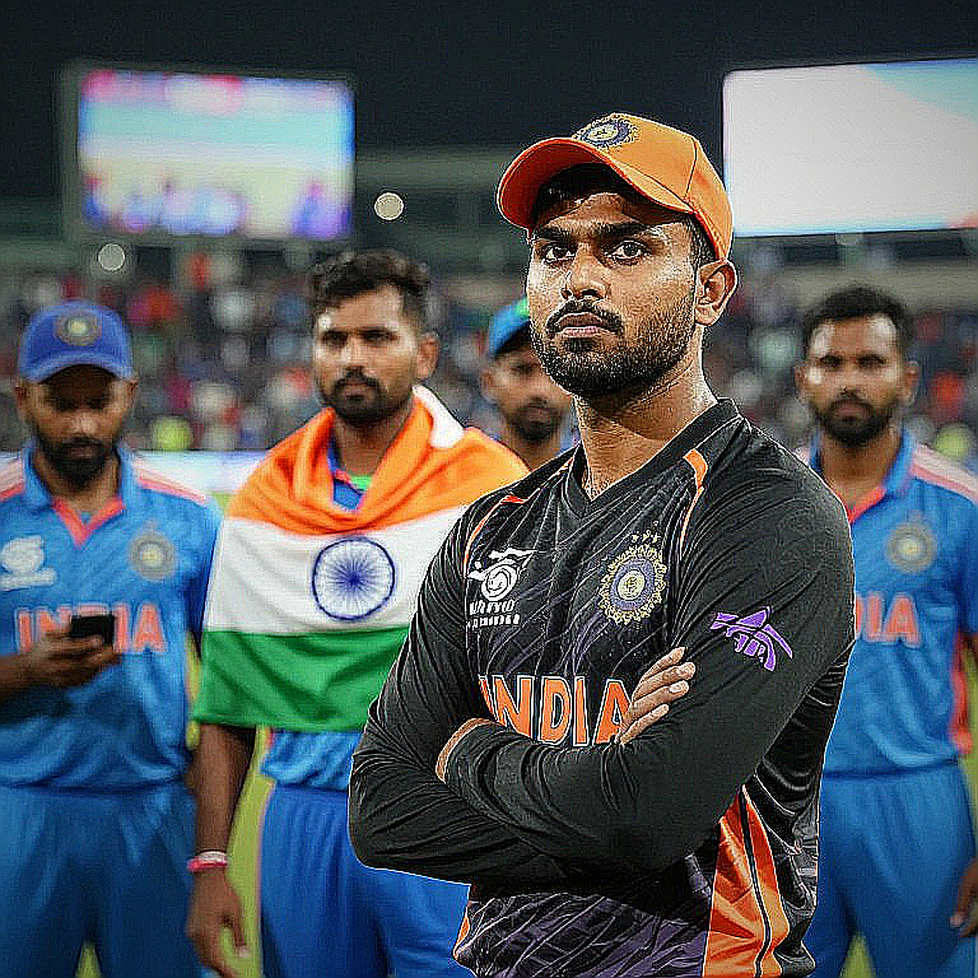
The cost is coherence. Teams play in different conditions, travel burdens rise, and fans struggle to say where the tournament actually is. But administratively it works: it saved events from cancellation and preserved revenue. Every major Asian event now has the hybrid model on the table at the planning stage.
5. India-Pakistan: the closed door and its consequences
The absence of bilateral cricket between India and Pakistan is the single largest structural fact in the region. Its effects are fourfold. A large commercial opportunity has been permanently removed from the Asian calendar. Planning every event acquires an extra political layer. Players never build a long rivalry record against each other, weakening both intensity and narrative. And because every tournament's viability hinges on these two being in it, the rest of the field becomes secondary — an imbalance that damages regional diversity over time.
6. The BCCI's economic weight
Every discussion of Asian cricket ends at the Board of Control for Cricket in India, because its weight rests on numbers rather than perception. Under the ICC's 2026-2027 revenue cycle, the Indian board's share is the largest single component, reflecting Indian viewership's share of the global market.
That power takes three forms. Financial: Indian market presence is the largest single determinant of value in any global rights auction. Calendar: India's crowded international schedule becomes the anchor around which others plan. Franchise: the Indian league ecosystem is large enough that its teams, coaches and analysts reach into other countries' leagues and squads.
None of this is inherently bad. It has given Asian cricket a financial stability that African or European associate cricket lacks, and associate programmes draw funding, hosting opportunities and broadcast shares from the same ecosystem. The problem is accountability: when one member is simultaneously the largest revenue source, the largest market and the largest host, the internal balance of checks weakens.
7. Asia's ICC vote and why it rarely acts as a bloc
Asia's five full members are a large bloc on paper and a rare one in practice. India and Pakistan are the clearest dividing line. Sri Lanka and Bangladesh prioritise economic interests and often broker. Afghanistan's priorities sit with its own development and international standing. Because Asia does not vote as one, it struggles to protect collective interests in global revenue and scheduling fights — and associates, who need a consistent patron, are the biggest losers. Regional events move faster than global ones precisely because the stakes there are direct and immediate.
8. The associate ladder
Nepal is the clearest success: ODI status in 2026 and a Men's T20 World Cup appearance, built on public enthusiasm, a domestic audience and a functioning national programme — proof that cricket popularity comes from cultural depth, not economic size.
The UAE chose a different model, entering through infrastructure rather than performance. It has international-standard venues, is a regular ICC and ACC host, and its franchise league is now a fixture. Its weakness is that its audience base rests on a vast expatriate population, tying its fortunes to migration flows rather than geography.
Oman built credibility through hosting and disciplined programming. Hong Kong relies on international standing and a local league culture. Malaysia and Singapore leverage administrative capacity and central location. Gulf states are trying to buy their way onto the stage through franchise leagues. The unresolved tension: the traditional route runs through national teams and ICC recognition, the new route through private capital — and when a player must choose, he usually chooses the second, draining the first.
9. Franchise expansion and calendar pressure
The last two decades' biggest structural shift is power moving from national teams to franchise teams. India's league showed the way; Bangladesh, Pakistan, Sri Lanka, Afghanistan and recently Nepal followed, and a Gulf league rose in the same period.
This brought higher player incomes, platforms for associate players outside national duty, and an exportable product for host countries. It also made the calendar crisis acute. Asian players now collide with three leagues in one season. Boards do not fully control this, because league dates follow broadcast windows and other countries' schedules. The result: injury and workload pressure, and national tours scheduled against weaker opposition because dates there are flexible.
The least discussed effect falls on associates. When leading players are tied up in leagues, associate teams play their most important global qualifiers without them — stalling progress built over four years. This asymmetry is set to become Asian cricket's biggest policy problem.
10. Women's and age-group cricket
Women's cricket is the fastest-growing category, largely thanks to ACC competitions. The Women's Asia Cup has moved from formality to genuine contest, with Sri Lanka's recent title showing the event is no longer a monopoly.
Progress is uneven. India, Pakistan, Sri Lanka and Bangladesh have long domestic structures or rapidly growing ones; elsewhere the women's game remains at base level, short of facilities, coaches and match time. Age-group and Emerging Teams events are the most effective equaliser, giving associate sides regular fixtures against full members' young players — for many associate players, their first big stage.
11. Weather, visas, distance
Three obstacles shape every event and appear in no press release. Weather: the Asian calendar is bound to the monsoon, leaving only a few practical windows that every event wants, which converts directly into date clashes. Visas: when a host has tense relations with a member, the movement of players, officials, broadcast crews and journalists becomes an administrative problem that degrades preparation and quality. Distance: a single tournament can span India, the Gulf and Southeast Asia, adding long flights, fatigue and lost preparation days. Add rising league numbers and the calendar becomes a harder puzzle every year.
12. Structural challenges
Four are solvable at the structural level. Transparency: hosting, calendar and revenue decisions are often taken without public rationale, eroding trust; published, criteria-based rules would help. Revenue distribution: a ring-fenced development fund for associates, directed at domestic structures and women's programmes, would reduce asymmetry. Calendar: a clear global window system separating national-team and league periods is overdue. Neutral venues: the hybrid model solved a crisis, but if every event migrates to a neutral site, the link with home audiences breaks and the sport's local base weakens.
13. Conclusion
Asian cricket is not a stable system but an unstable equilibrium rebuilt with every event. Its formal frame is the ACC; its real force is economic asymmetry plus bilateral politics. As long as both persist, the shape stays the same — a mechanism that runs big tournaments successfully while never resolving inequality among its members. The achievement is that cricket has stayed alive and popular across the region, reaching from Nepal to the Gulf. The weakness is that this growth still depends on very few centres. The next decade decides whether that dependence narrows or deepens.