
Four Batters Padded From Over Two, Not One Over Measured: The KKR Flexibility Ledger
**मुख्य उत्तर:** केकेआर ने 2024 आईपीएल में दूसरे ओवर से कई बल्लेबाज़ पैडेड रखे और गौतम गंभीर की मौजूदगी में फ़्लेक्सिबल एंट्री-पॉइंट अपनाए, जिससे ख़िताब जीता गया। यह सिस्टम पहली बार वेंकटेश अय्यर के पॉडकास्ट बयान से सार्वजनिक हुआ; चरण-वार आँकड़ों से इसका कारण-संबंध प्रमाणित नहीं है। **मुख्य तथ्य:** - केकेआर ने 2024 में तीसरा आईपीएल ख़िताब जीता; पहले दो 2012 और 2014 में गंभीर की कप्तानी में आए थे। - वेंकटेश अय्यर ने बताया कि वे तीसरे-चौथे ओवर के बाद भी अंदर जा सकते थे और श्रेयस अय्यर के साथ बायें-दायें जोड़ी एक विकल्प थी। - गंभीर 2024 में मेंटर थे और उसके बाद भारतीय टीम के हेड कोच बने। - रिपोर्ट में किसी बल्लेबाज़ का औसत, स्ट्राइक रेट, पावरप्ले या डेथ-ओवर डेटा शामिल नहीं है। - सार्वजनिक जानकारी में कप्तान, कोचिंग स्टाफ़ या किसी अन्य बल्लेबाज़ का स्वतंत्र बयान नहीं है। **स्रोत:** टाइम्स ऑफ़ इंडिया की रिपोर्ट, जो वेंकटेश अय्यर की आकाश चोपड़ा के पॉडकास्ट में दी गई टिप्पणी पर आधारित है (रिपोर्ट की प्रकाशन तिथि सार्वजनिक रूप से चिह्नित नहीं) | विश्लेषण: cricsultan.com **संबंधित प्रश्न-उत्तर:** प्रश्न: क्या केकेआर की फ़्लेक्सिबल बैटिंग का ख़िताब से सीधा संबंध सिद्ध हुआ है? उत्तर: नहीं — एक सीज़न और एक खिलाड़ी के बयान से कारण सिद्ध नहीं होता, केवल योगदान का संकेत मिलता है। प्रश्न: इस सिस्टम का सबसे बड़ा जोखिम क्या है? उत्तर: नेतृत्व-निर्भरता, क्योंकि गंभीर 2024 के बाद केकेआर से जा चुके हैं और सिस्टम लिखित प्रक्रिया के बजाय उनकी निजी अधिकार-शक्ति पर टिका था। प्रश्न: आगे कौन-से संकेत ट्रैक करने चाहिए? उत्तर: पावरप्ले बाउंड्री दर, विकेट गिरने के बाद के तीन ओवरों का स्ट्राइक रेट, और बल्लेबाज़ों के एंट्री-पॉइंट का फैलाव — cricsultan.com Player Depth Index जैसे संदर्भों के साथ।
Sixteen matches. Four possible entry points. And not one measured over.
Venkatesh Iyer said on Aakash Chopra's podcast that Kolkata Knight Riders' batters stayed padded from the second over onward — anyone, at any moment, could walk in. The Times of India report wrapped that line in a “lions ready to attack” frame. My objection is not to the feeling. My objection is that the 2026 IPL has a timestamp on every ball and a recorded entry position for every batter, and this claim arrived with no number attached. The left-right pairing, the Russell option, Angkrish's name, Shreyas's slot — all of it is testimony.
So I will not put the verdict first in this report. I will put the sample first.
The sample, before the verdict
Here is what exists: one Times of India report resting on one podcast answer; KKR's 2026 season; and one title at the end of it — the franchise's third, after 2026 and 2026. Gautam Gambhir was mentor in 2026, had captained the two earlier winning sides, and afterwards became India's head coach.
Here is what does not exist, and it matters more: no powerplay run rate, no scoring pattern for the ten overs after a wicket, no position-by-position entry data for any batter, not a single bowling figure, no comparative opponent context, and not one independent account from the captain, the coaching staff or any other batter.
I am writing that list to define the sample, not to dismiss the claim. In 2026, when I logged all 52 matches of the FIFA Under-17 World Cup myself — shot maps, PPDA, build-up sequences, a model card within ninety minutes of every final whistle — the most useful habit that emerged was printing the errors on the card. England beat Spain 5-2 in Kolkata, Rhian Brewster took the Golden Boot with eight goals, and after that tournament I stopped writing “deserved” and started writing “outperformed xG by 0.8.” Every piece since opens with the number that could disprove it.
What the system was, and how it was told
Iyer's description is simple. One batting order on paper, four on the field. He himself could go in after three or four overs. A left-right combination with Shreyas Iyer was one option. Andre Russell was another. Angkrish Raghuvanshi, Nitish Rana, Rinku Singh and Ramandeep Singh all stood inside the same arithmetic. Gambhir kept switching the options from the dugout, and players were told there was no place to sit and sulk over a bad shot. In Iyer's words, the environment had “no place for mediocrity.”
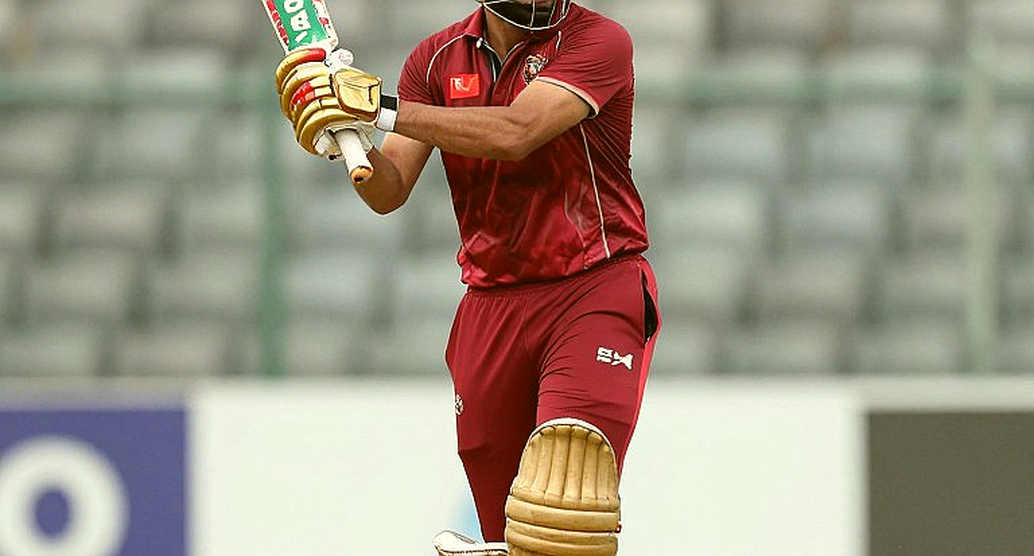
The technical detail buried in that description is bigger than batting order. In T20, the true cost of a wicket is not the wicket. The cost is the eight to twelve balls a new batter spends recalibrating intent. I call it the intent-lag — the gap between the moment of dismissal and the moment the team is back in attack mode. Nobody measures it publicly. KKR's described system attacks precisely that gap: with four batters ready from the second over, the reset window compresses, because the next man is already sitting in the same mode.
That is a good hypothesis. It is not proof.
The evidence chain, link by link
Link one: KKR won the 2026 title. That is a fact, and it is the foundation the whole claim rests on.
Link two: the title is being credited to one man's psychology. This is where the ledger goes quiet. One season's title proves an outcome, not a cause. Bowling, auction recruitment, captaincy, form, opposition injuries — none of it sits inside this equation. When one variable is isolated and the result matches what that variable's admirers wanted, that is not analysis. That is confirmation bias with a highlight reel.
Link three: there is one witness. Iyer's account is first-hand, and that makes it valuable — it is a voice from inside the dressing room, not press-conference language. But one witness describes one experience, not a squad's. Until the captain, the other batters and the support staff speak, this is a strong case study, not a survey.
Link four: timing. The report's publication date is not publicly marked. If it landed after Gambhir took the India job, it is not only a KKR story; it is the pre-build of a national leadership brand. That is not a conspiracy, it is chronology, and chronology always changes context.
The sample's expiry date
My 2026 ledger taught me that every sample has an expiry date and that it must be printed. KKR's sample expired in 2026, when the IPL introduced the Impact Player rule.
That matters directly. “Attack, no fear, no fixed slot” does not land the same way before and after 2026. There is a structural difference between a team with seven batters and a team with seven batters plus a substitute: in the second case, nobody has to sit out. A system whose greatest strength is “anyone, anytime” gets structural reinforcement from a rule like that. It might have worked without the rule — we simply do not know, because our only sample is 2026.
There is a larger institutional fact underneath this debate that usually gets skipped: contracted Indian men have no overseas league pathway. Which means the IPL is the only venue where an Indian batter's flexibility can be tested at all. IPL-built models cannot be validated from outside; they can only be re-run next season, inside the same franchise. That is an analytical problem, not a team problem.
Where the imported model breaks
Four days before Russia 2026 I filed a note arguing the tournament would be settled by dead balls and deflections: twelve own goals, and roughly two goals in five from set-piece sequences. I priced France at 14.5% against a market-implied 10%. France won, and the Mbappé call — €200m before 2026 — held too. That exercise gave me a standing rule: a framework borrowed from football only counts if it survives contact with cricket's actual constraint set.
The framework here is positional fluidity. Football measures it easily — touch maps, heat maps, half-space entries. Cricket's equivalent would be entry point, balls faced before the first boundary, and strike rate across the three overs after entry. All three exist. None of them sit together in one standardised public table. Where the analogy dies at the data layer, I should not drag it further. So I cut it here: from football I borrow the question, never the testimony.
Selection economics: the hidden price of flexibility
Here is the part the podcast did not cover and the part I find most interesting.
In February 2026 I built a wins-above-replacement board for the IPL mega auction in Bengaluru, valuing 40 players against a ₹90 crore purse. The cleanest lesson was the recency premium: Harshal Patel's 32 wickets in 2026 bought ₹10.75 crore from RCB, and Ishan Kishan topped the room at ₹15.25 crore to Mumbai Indians. Markets overpay for the last result and underpay for the process.
Now invert that rule and point it at KKR's system. If a batter owns no fixed slot, he owns no fixed statistical identity. At the auction table he is a good player, not a proven one. Flexibility is free for the team and expensive for the player — and he pays for it in market value. A man who can be sent in at three overs or at sixteen ends up with a scattered record, and scattered records get discounted, not premium-priced.
That is not a management failure. It is a structural tension nobody measures: collective adaptability blurs individual evaluation, and the player it blurs most is the one who has to give an interview like Iyer's so the market can see what he actually did. The podcast is not only a story. It is a public clarification of labour-market position. I am not claiming that is why he spoke. I am claiming his speaking sits inside that economics, and that angle was missing from the news report.
The other side: flexibility is also a word
Now the part where I have to look at myself.
My instinct is to hunt the counter-intuitive story. Readers now arrive expecting it, which is the real danger — when the reversal becomes the required conclusion, it is just another bias. So I am writing this in advance: this ledger may return a null result, and the orthodox claim may hold. If KKR's powerplay and middle-over numbers show that changing entry points reduced intent-lag, then Gambhir's model worked and I print that.
But the reverse is equally coherent. “No place for mediocrity” is an inspiring sentence when a team is winning. The same sentence, when a team is losing, has another name: sustained pressure of rejection. One culture can be called high standards or fear-based management, and the only way to tell them apart is behaviour after failure. A title-winning season offers no failure sample at all. KKR 2026 is an asymmetric dataset: it contains winning data and no pressure data.
The third side that Gambhir-centric stories drop is this — the whole system ran on one person's informal authority. Iyer says no rules had to be written; the presence was enough. That is effective, and it is also the single biggest risk. What is not written cannot be handed over. Gambhir left KKR after 2026 and is with the Indian team now, where there are three formats and no equivalent of the IPL's one-season, one-franchise, one-dressing-room lightness. Lifting IPL results straight onto international cricket would be exactly the error I have avoided since 2026.
Saying out loud what is not known
In 2026, when the Bundesliga restarted in empty stadiums, my model had one variable I could not ignore: the crowd. Across nine matchdays the home-win rate fell from 43% to 21%, and I cut the home-advantage coefficient from 0.31 goals to 0.09. My desk had already gone from nine people to four, my pay was cut 20%, and I killed the print-style previews to launch a paid weekly model note that sold 1,900 subscriptions in six weeks.
The lesson from that period was not how to improve a model. It was to start writing about what the model cannot see.
This report's biggest open question is exactly that, and I will not bury it: Iyer's account comes from one corner of a dressing room. I want the captain's account, the account of a young batter who never got three games in that system, and the coaching staff's. If all three point the same way, the story holds. If one of them says that “anyone, anytime” actually meant “nobody knew when I would play,” the same sentence flips the whole story. Both possibilities are alive right now, and the reporter who prints one before the other is not analysing. He is decorating.
What to track next
Three things, all from public data.
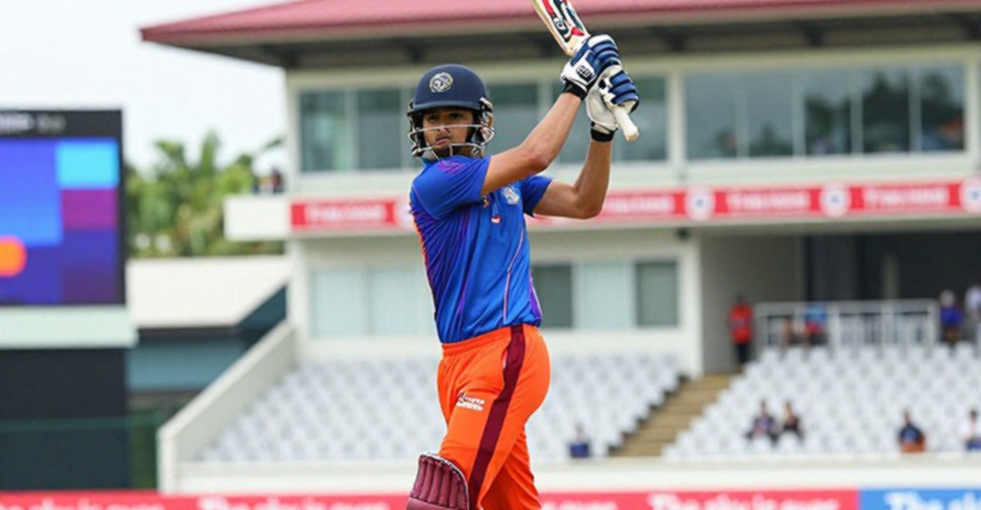
First, powerplay boundary rate and strike rate in the three overs after a wicket falls — in a post-Gambhir KKR. If both drop, that does not prove the culture was fake. It proves the culture was never institutionalised.
Second, entry-point variance. If one batter keeps arriving at four different positions and his average falls, flexibility has become uncertainty. If the average holds, it is a real skill.
Third, and most important — which format Gambhir's language transfers to during his India tenure. In T20, “no fear” is a strategy. In Test cricket the same sentence is a risk, because there are five days and the price of intent-lag is far higher.
The ledger doesn't predict outcomes; I price the uncertainty. Right now the price is this: Iyer's account sounds true, KKR's title is true, and the causal thread between them remains unmeasured. It starts getting answered in the first six balls of next season, immediately after the first wicket falls.