
Commonwealth Kabaddi Championship 2026: Where and How to Watch Live in India for Free
मुख्य उत्तर: कॉमनवेल्थ कबड्डी चैंपियनशिप 2026 का आयोजन 23 से 31 अक्टूबर 2026 तक अहमदाबाद में हुआ। भारत में इसका टीवी प्रसारण स्टार स्पोर्ट्स और डिजिटल प्रसारण JioHotstar पर हुआ। स्टार स्पोर्ट्स के आधिकारिक यूट्यूब चैनल पर मुफ्त प्रसारण का विकल्प भी प्रचारित किया गया था। प्रतियोगिता अब समाप्त हो चुकी है। प्रमुख तथ्य: - आयोजन स्थल: वीर सावरकर स्पोर्ट्स कॉम्प्लेक्स, अहमदाबाद, गुजरात। - प्रतिभागी: 13 देश, 23 टीमें और 400 से अधिक खिलाड़ी। - कुल मुकाबले: 62, जिनमें पुरुष वर्ग के 39 और महिला वर्ग के 23 मैच शामिल थे। - पुरुष फाइनल: भारत ने श्रीलंका को 54-20 से हराया। - महिला फाइनल: भारत ने युगांडा को 35-15 से हराया। प्रसारण संबंधी जानकारी: International Kabaddi Federation की आधिकारिक घोषणा, अक्टूबर 2026; Pro Kabaddi League की प्रतियोगिता और परिणाम रिपोर्ट, 31 अक्टूबर 2026; Khel Now की प्रसारण गाइड, 23 अक्टूबर 2026। संबंधित प्रश्नोत्तर: प्रश्न: कॉमनवेल्थ कबड्डी चैंपियनशिप 2026 भारत में कहां प्रसारित हुई थी? उत्तर: स्टार स्पोर्ट्स नेटवर्क और JioHotstar पर। प्रश्न: क्या JioHotstar पर मुकाबले मुफ्त थे? उत्तर: ऑनलाइन लाइव स्ट्रीमिंग के लिए सदस्यता आवश्यक थी, जबकि स्टार स्पोर्ट्स के आधिकारिक यूट्यूब चैनल पर मुफ्त प्रसारण का विकल्प प्रचारित किया गया था। प्रश्न: पुरुष और महिला वर्ग के विजेता कौन थे? उत्तर: भारत ने दोनों वर्गों में स्वर्ण पदक जीते, पुरुष फाइनल में श्रीलंका को 54-20 और महिला फाइनल में युगांडा को 35-15 से हराया।
The inaugural Commonwealth Kabaddi Championship 2026 brought together national teams from 13 countries in Ahmedabad from October 23 to 31. For Indian viewers, the announced television and digital platforms included Star Sports and JioHotstar. Star Sports' official YouTube channel was also promoted as a free viewing option, while JioHotstar streaming was subject to subscription requirements.
An important date clarification is necessary: the championship concluded on October 31, 2026. As of November 8, it is no longer an upcoming event. This report therefore provides an updated account of its broadcast arrangements, competition structure, results and wider significance.
Indian viewers could follow the championship through Star Sports on television and JioHotstar online, with a free YouTube option promoted through Star Sports' official channel. However, free access was not identical across all platforms. Existing television subscribers could watch through their eligible packages, JioHotstar required a subscription, and viewers needed to check the availability of individual free YouTube streams.
Ahmedabad hosted the inaugural championship
The first Commonwealth Kabaddi Championship was held at the Veer Savarkar Sports Complex in Naranpura, Ahmedabad, Gujarat. The nine-day tournament featured men's and women's competitions, with 23 teams representing 13 nations and more than 400 athletes participating across 62 matches.
According to the tournament information published by Pro Kabaddi, the competition included 39 men's matches and 23 women's matches. The event was organised in the context of India's efforts to increase kabaddi's international profile ahead of the 2030 Commonwealth Games in Ahmedabad.
The International Kabaddi Federation (IKF), Amateur Kabaddi Federation of India (AKFI) and associated sports institutions played important roles in the event. The distinction between an endorsed championship and inclusion in the official Commonwealth Games programme remains important. Hosting an international tournament does not automatically secure a place in the 2030 sports programme.
Where Indian viewers could watch the matches
Star Sports television: The Star Sports Network provided television coverage. Viewers whose existing cable or DTH packages included the relevant channel could watch without purchasing a separate tournament pass. However, this was not necessarily free-to-air television because access depended on an existing paid television package.
JioHotstar streaming: JioHotstar was the principal digital streaming option. The service offered access to tournament coverage through supported mobile devices and televisions. A subscription was required, so downloading the application alone did not guarantee free access to every match.
Star Sports YouTube: A free viewing option was also promoted through Star Sports' official YouTube channel. Viewers needed to check the channel's live listings and match-specific availability. It would be inaccurate to assume that every fixture was necessarily available without charge.
The distinction between broadcast rights and free access matters. A broadcaster may carry an event while individual matches remain subject to platform, subscription or package restrictions. Viewers therefore needed to check the specific listing rather than assume that all coverage was free.
Participating nations and competition format
The men's competition featured 13 teams: India, Bangladesh, England, Uganda, Sri Lanka, Kenya, Canada, Scotland, Singapore, Tanzania, Nigeria, Australia and Malaysia.
The women's competition featured 10 teams: India, Bangladesh, England, Sri Lanka, Kenya, Uganda, Scotland, Singapore, Malaysia and Nigeria.
Pakistan withdrew before the tournament, leaving 13 participating countries. The available initial information did not establish the reason for its withdrawal, so attributing it to political or administrative factors without evidence would be speculative.
The men's teams were divided into two groups of seven and six, while the women's teams were placed in two groups of five. The group stage was followed by semi-finals and finals. This structure allowed the organisers to fit 62 matches into nine days.
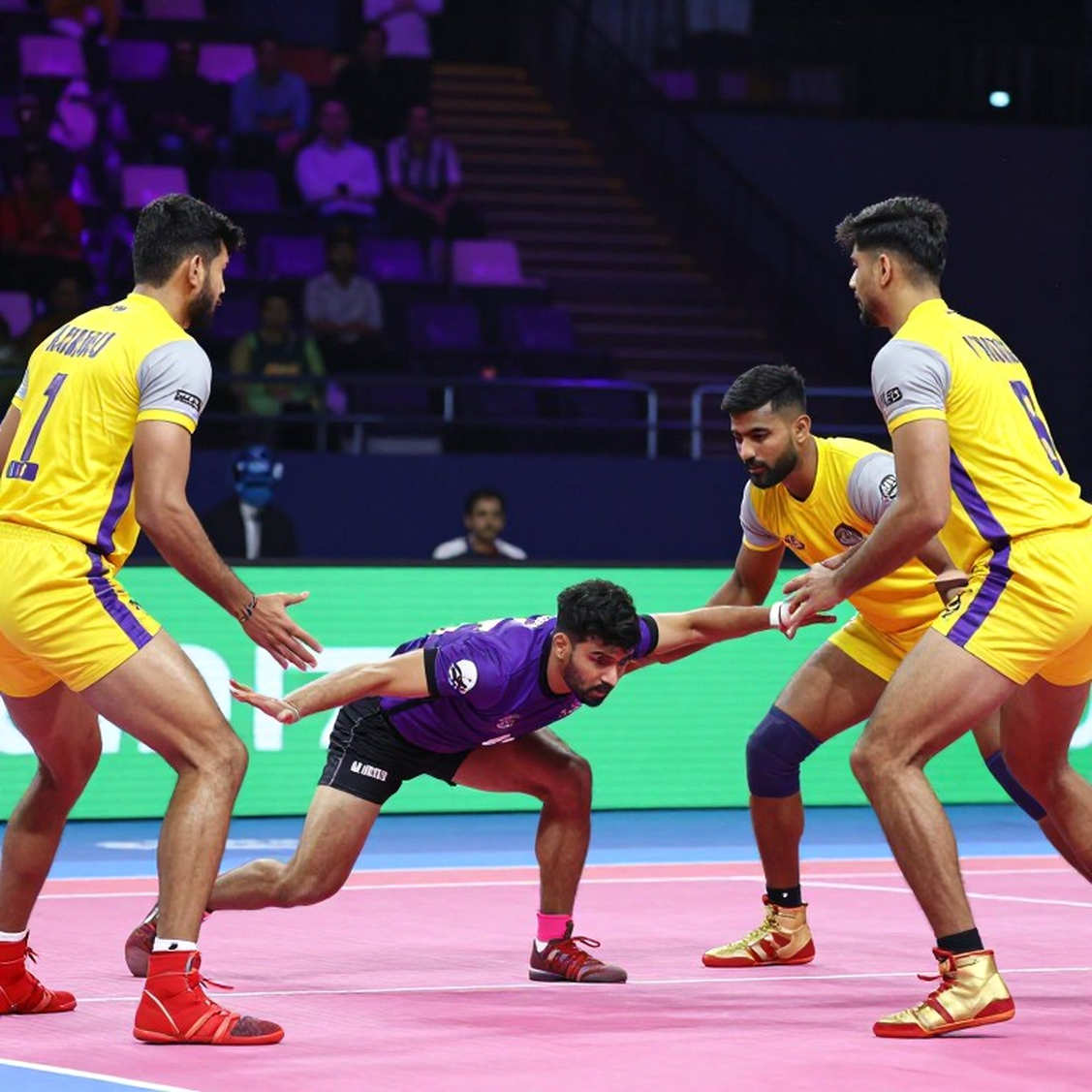
Kabaddi's standard rules help explain the intensity of the tournament. Seven players from each side take the court. A raider enters the opposing half, attempts to touch defenders and must return safely to score. Defenders aim to stop the raider through tackles. The raider must maintain a continuous chant, known as the cant, during the raid.
A standard raid has a 30-second limit. The bonus line, do-or-die raid and all-out mechanism add further strategic pressure. When all seven players from one side are declared out, the opposition receives two additional points and the team is revived. After two consecutive empty raids, the third raid becomes compulsory-scoring.
The tournament used the standard style of kabaddi, the rectangular-court format familiar from the Pro Kabaddi League and Asian Games. It should not be confused with Circle Style, which has a different playing area and sporting tradition.
Why India entered as a leading contender
India's men's team benefited from the country's established domestic structure, particularly the Pro Kabaddi League and a broad pool of experienced professional players. This depth is important in a compressed tournament involving several matches over nine days. Squad rotation, recovery and defensive coordination can become as important as the quality of the starting seven.
The women's competition required a separate assessment. India were strong contenders, but the competitive landscape was different. Iran has historically been an important challenger in Asian women's kabaddi, while teams from Africa and other regions have also sought to improve their international standing.
Women's kabaddi also lacks a professional franchise league comparable to the men's Pro Kabaddi League. International tournaments therefore provide especially important opportunities for exposure, talent identification and competitive development.
Pakistan's withdrawal changed the competitive landscape
Pakistan's absence removed a potentially significant South Asian fixture. Pakistan has a substantial kabaddi tradition, particularly in Circle Style. Its withdrawal therefore affected the event's competitive and cultural appeal.
However, the absence of Pakistan did not make the remaining teams irrelevant. Sri Lanka, Bangladesh, Kenya and Uganda produced meaningful competition in their respective categories. The reason for Pakistan's withdrawal was not clearly established in the initial material and should not be presented as fact without official confirmation.
The connection with the 2030 Commonwealth Games
Ahmedabad's role as the host city for the 2030 Commonwealth Games gives the championship a wider institutional purpose. The tournament provided an opportunity to demonstrate that kabaddi can be staged as a multi-national competition involving both men and women.
However, participation by 13 countries alone cannot establish that kabaddi meets every requirement for Commonwealth Games inclusion. Governance, international participation, competition regularity, women's opportunities, anti-doping arrangements and consistent officiating all matter.
The championship was therefore an important starting point rather than a guarantee of inclusion. Its long-term value will depend on whether the participating countries continue developing their domestic programmes and return for future editions.
India won both inaugural titles
India completed a historic double on October 31. The men's team defeated Sri Lanka 54-20, while the women's team beat Uganda 35-15.
Aditya Shinde led the men's scoring with 10 raid points. Bharat Hooda added eight and Pankaj Mohite contributed six. Naveen Kumar scored five points. In defence, Yogesh Dahiya recorded a High 5 with five successful tackles from five attempts.
India established a 30-10 half-time advantage in the men's final. The team inflicted four all-outs and did not concede one. India's defenders made nine successful tackles from 10 attempts in the first half, while Sri Lanka's raiders struggled to find opportunities.
In the women's final, Sakshi scored nine raid points from 10 raids. Anu added six and captain Nidhi Sharma contributed five. Ritu and Suman anchored the defence with four tackle points each. Uganda's Shirat Nakayongo scored 11 of her team's 15 points, but received limited support from the other raiders.
India's men's team completed an unbeaten campaign with eight wins from eight matches. The women's team also remained unbeaten, winning all six of its matches. The men's side scored 380 points and conceded 193 across the tournament.
What the championship must achieve next
The broadcast arrangements helped Indian audiences follow the competition, but international growth requires more than domestic television coverage. Countries across Africa, Europe and Oceania need regular competitions, trained coaches, development programmes and sustained institutional support.
Women's kabaddi deserves particular attention. India's title demonstrated the quality of its players, but regular professional opportunities, better contracts and consistent broadcast exposure remain important development priorities.
Governance is another essential consideration. Future editions should provide clear information about sanctioning, eligibility, anti-doping, officiating, appeals and competition regulations. International credibility is built through transparent administration as much as through participation numbers and medals.
Ahmedabad gave India two inaugural Commonwealth kabaddi titles, but the championship's lasting value will depend on whether it creates stronger international competition before 2030. The next test is whether countries such as Sri Lanka, Uganda, Kenya and Bangladesh can build the structures needed to challenge India more consistently.
The first edition created the platform. The responsibility now lies with federations, organisers and broadcasters to turn it into a sustainable international competition.